The "Intestate" Nightmare: The Nominee vs. Heir Delusion
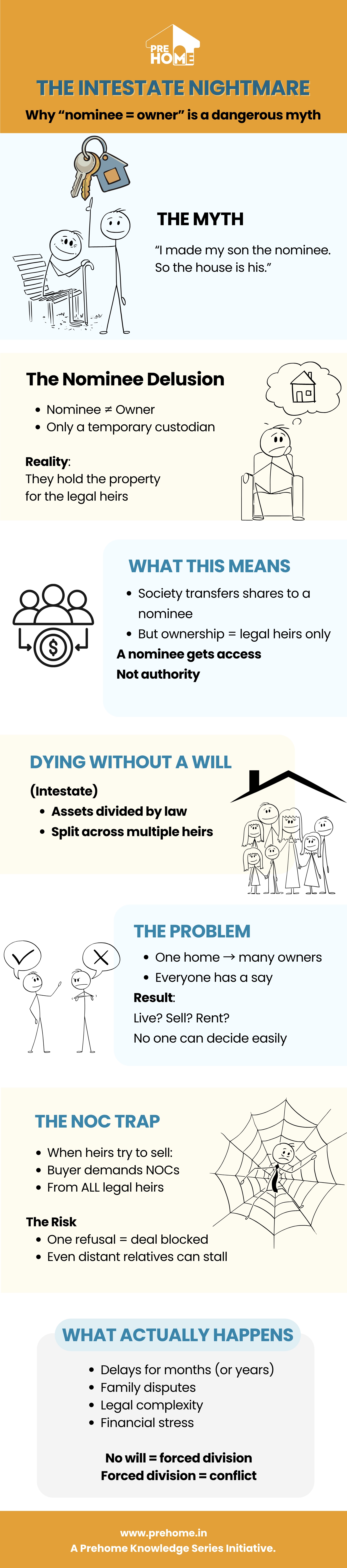
In Topic 13, we looked at how to use your home equity. But what happens to that wealth when your life ends? The biggest legal myth in Indian real estate is a single phrase "I made my son the nominee, so the flat will be his."
1. The Great "Nominee" Delusion
-
- The Legal Precedent : The Supreme Court has repeatedly ruled that a nominee is simply a "trustee" or "custodian" * The Reality: The housing society/developer will transfer the shares to the nominee for administrative reasons, but the nominee must legally hold the property for the rightful legal heirs. A nominee collects the keys, but only a legal heir has the real power.
2. The "Intestate" Fragmentation
If you die without a Will, you die "Intestate." Your assets will be divided according to your religion (e.g., Hindu Succession Act).
-
- The Nightmare : A straightforward ₹2 Crore apartment suddenly faces division into multiple ownership shares (spouse, children, mother). If one heir wants to live there while another wants to sell, the property becomes unusable.
3. The "No-Objection" Hostage Situation
If you die without a Will, you die "Intestate." Your assets will be divided according to your religion (e.g., Hindu Succession Act).
-
- The Buyer's Demand : Even if the family agrees on who gets the house, the open market can be brutal. If your heirs ever try to sell the property, the bank of the new buyer will require a No Objection Certificate (NOC) or a Registered Release Deed from every single blood relative and Class I heir.
- The Danger : A distant sibling or estranged relative can refuse to sign the NOC, effectively holding the sale hostage until they receive compensation.
Leaving your property intestate does not keep the peace; it guarantees conflict.
You realize the nominee form is not enough. You need to outline your legacy while you are still alive and make sure you aren’t passing down a debt trap.
In Our Next Series :
Blog 41: The Toolkit: Wills, Gift Deeds, and the Debt Trap