The RERA Mirage: What the Law Protects (And the Loopholes Builders Exploit)
Introduction:
In Topic 15, we covered how to manage a property like a professional landlord. But before you can manage an asset, you have to receive it—intact, on time, and as promised.
There is a moment that plays out in sales offices across India every single day. You ask the builder for a guarantee of delivery. They slide a document across the table, point to a registration number, and say, "It's RERA registered. You are fully protected." You nod, reassured.
That reassurance is understandable, but it is dangerously incomplete. The gap between what buyers believe RERA guarantees and what it actually does is where India's worst real estate nightmares begin.
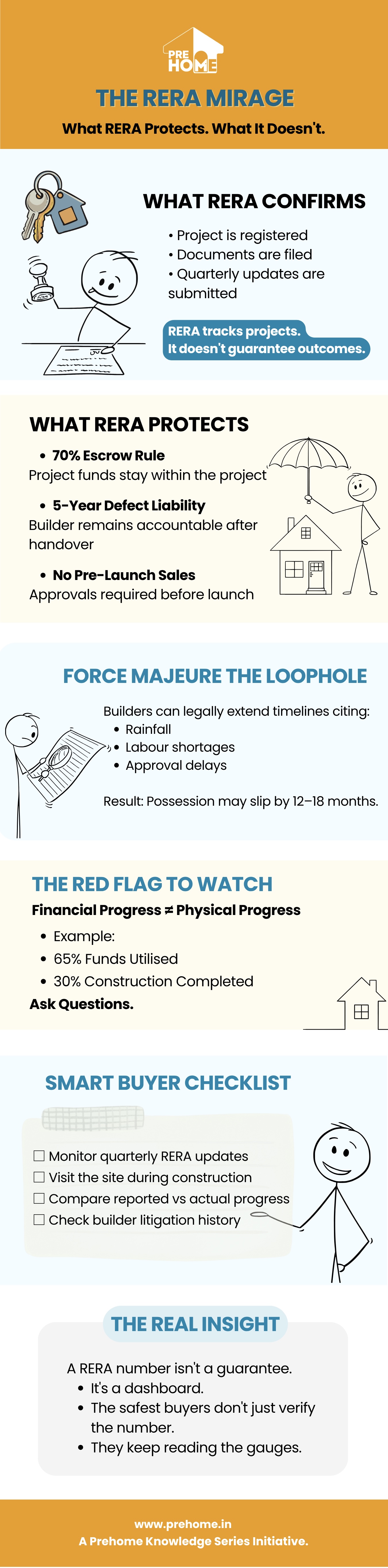
1. What a RERA Number Actually Confirms
The Real Estate (Regulation and Development) Act of 2016 was a genuinely transformative reform. RERA is not the problem; the myth that has grown around it is.
A RERA registration only confirms three things:
-
- The builder has submitted their project documents to the state authority.
- The project exists on a public record.
- The builder is legally obligated to file quarterly updates on construction progress.
What it does NOT confirm is equally important:
-
- That the builder has the financial capacity to complete the project.
- That construction is actually tracking the timeline in reality (not just on paper).
- That the funds collected from buyers are being used strictly for this specific project.
- That the builder cannot find legal routes to delay delivery.
RERA is a monitoring framework. But a monitoring framework only works if someone is actually doing the monitoring.
2. The Protections RERA Actually Provides
To be clear, RERA’s protections are real. The RERA era has seen fewer outright frauds and established a more level legal playing field.
-
- The Escrow Rule: Builders must deposit 70% of collected funds into a dedicated project account, only to be withdrawn for that project's construction.
- Defect Liability: Builders carry structural and quality defect liability for five years post-delivery.
- Pre-Launch Ban: Projects must have all approvals in place before launch, ending the era of selling pre-approval.
The question is not whether RERA works. The question is: Are you using the tools it gives you?
3. The "Force Majeure" Escape Hatch
Inside most RERA-compliant purchase agreements sits a clause that receives very little attention at signing: Force Majeure (events beyond reasonable control).
-
- The Loophole: While designed for genuine natural disasters, this clause has become the most frequently invoked tool to legally extend delivery. Builders routinely cite unseasonal rainfall, labor shortages, or municipal approval delays.
- The Reality: Add this to the standard 6-month grace period hidden in your contract, and a builder facing construction difficulties can push possession by 12 to 18 months without technically breaching RERA.
- The Fix: Buyers who understand this clause negotiate its scope before signing, clarify the definition of qualifying events, and confirm their compensation rights.
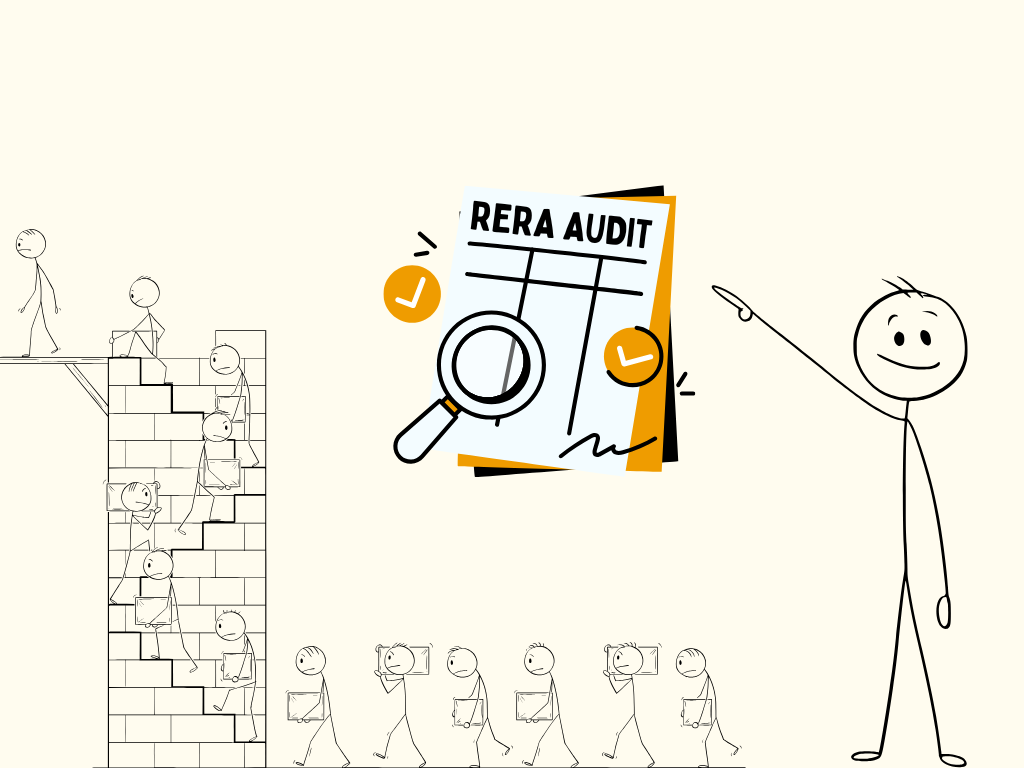
4. How to Audit the RERA Dashboard
Every state has a public RERA portal (MahaRERA, RERA Karnataka). Most buyers visit it once to check the number, and never return. The buyers who return regularly hold a massive information advantage.
-
- The Quarterly Progress Reports Look for patterns. Are reports filed on time, or are there consistent gaps suggesting disorganized operations? Is the builder repeatedly citing external factors for delays?
- The Physical vs. Financial Progress Gap (The Most Critical Signal) RERA requires builders to report two distinct metrics: Financial completion (budget spent) and Physical completion (actual construction done). In a healthy project, these numbers stay broadly aligned.
A. The Red Flag: If a builder reports 65% financial completion, but photographs show the construction is barely at the foundation stage, where is the money going?
B. The Nuance: This mismatch is not conclusive evidence of fraud—it may have legitimate explanations (like upfront land costs). But it is a glaring signal that deserves a direct question to the builder.
- Litigation History The portal lists active legal cases against the builder. A small number of cases is normal industry friction. A large and growing list—particularly involving fund diversion or delivery failures—is a systemic warning.
5. The Vigilant Buyer Checklist
The buyers who arrive at possession day without surprises share a few consistent habits:
-
- They treat the RERA check as the beginning of their monitoring, not the end.
- They do at least one physical site visit at the 25–30% construction stage to calibrate whether the reported progress matches reality.
- They ask the builder specific questions about any financial vs. physical progress discrepancy—and carefully assess the quality of the answer.
A RERA registration is not an insurance policy; it is a dashboard. The most protected buyers are the ones actively reading the gauges, not the ones who verified the number once and closed their eyes.
The RERA dashboard tells you what a builder is reporting about their project. But it cannot tell you whether the builder has the financial capacity to deliver—whether the underlying land is clear, and whether they are drowning in toxic debt. That layer of due diligence looks entirely different.
In Our Next Series :
Blog 47: Decoding the Builder's Financial Health: What the Balance Sheet Reveals