
Chat with us
Join our waitlist

Smarter Exits – Innovative Strategies for NRI Property Owners

03 OCT,2025     2 min read

Smarter Exits – Innovative Strategies for NRI Property Owners

Introduction:

In our last blog, we explored the many challenges NRIs face when selling property in India, including distance, transparency problems, taxes, and issues with moving money back. These obstacles often lead NRIs to make hasty sales, which means they miss out on potential profits.

But selling property doesn’t have to feel like a struggle from afar. With new digital tools, clear models, and flexible exit strategies, NRIs now have more options than ever to sell smartly and on their terms.

Let’s examine some innovative approaches that are changing how NRIs divest their properties.

1. Digital-First Property Sales

The days of endless paperwork and needing to be physically present to sell property are over.

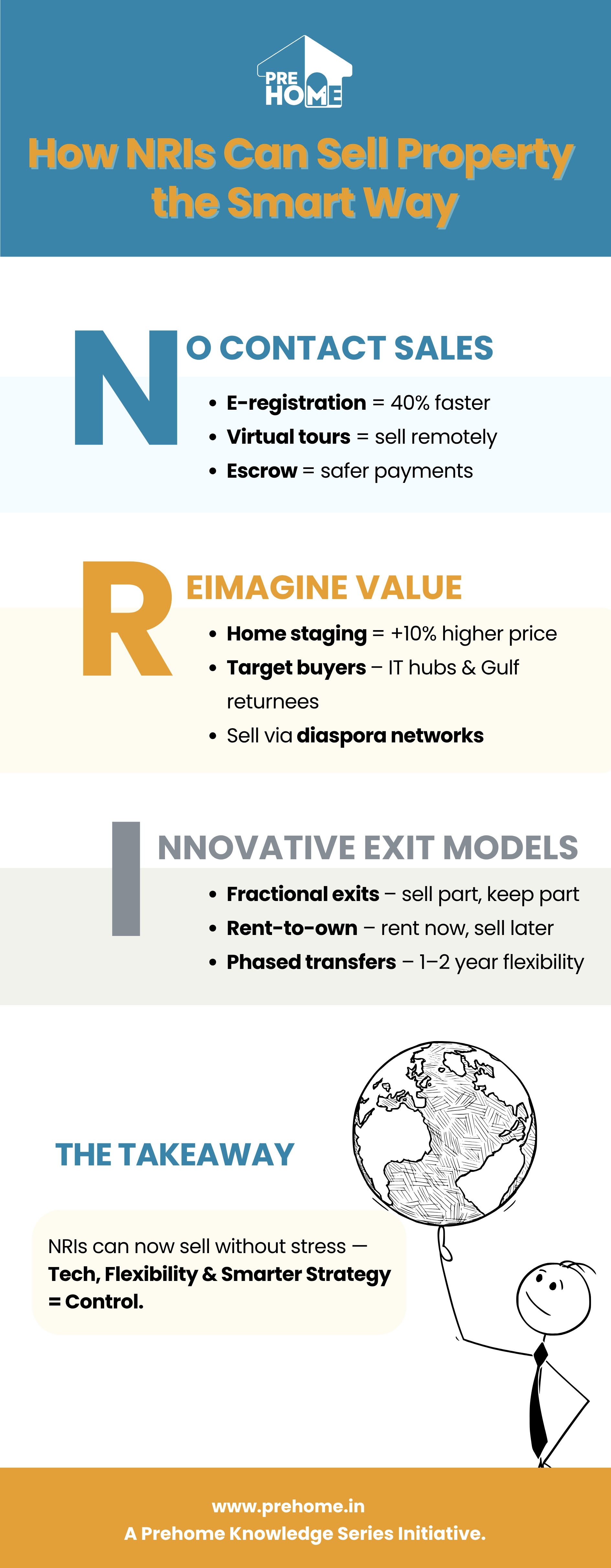
    • Digital documentation & verification: Most metro registries now offer e-stamping and online title checks. For instance, Maharashtra’s e-registration portal has reduced average processing time by nearly 40% since 2022.
    • Virtual showings: PropTech platforms allow 360-degree home tours, letting NRIs market to serious buyers without having to travel.
    • Secure payments: Online escrow mechanisms make transactions more transparent, decreasing reliance on cash deals.

This is a significant improvement from the “trust gap” we discussed in Blog 1. Digital-first sales help balance the information gap that NRIs often face.
2. Flexible Disposal Models

Sometimes, the best way to exit isn’t an immediate sale; it’s about having structured options.

    • Fractional exits: Platforms now allow owners to sell partial stakes in high-value properties. Knight Frank predicts that India’s fractional ownership market will reach ₹4,000 crore by 2030. For NRIs, this means they can access cash without selling the entire property.
    • Rent-to-own pathways: Rather than waiting for a buyer, some NRIs choose to lease their homes with rent-to-own agreements. This lets tenants gradually become owners, creating a steady rental income while paving the way for a future sale.
    • Phased transfers: In some situations, property transfers can be structured over 1 to 2 years. This gives buyers more affordability and NRIs greater control over timing.

Aha Stat: Almost 38% of NRI-owned homes in India remain locked or underused (ANAROCK 2023). Flexible exit models help put these unused assets to work.

3. Value Maximization Techniques

Even with the distance, NRIs can achieve better value by positioning their properties wisely.

    • Home staging from abroad: Managed property services can stage and care for homes, raising sale prices by up to 8 to 10% on average.
    • Targeting the right buyer base: For instance, Bengaluru’s IT corridor attracts demand from local professionals, while Kerala sees more interest from families returning from the Gulf.
    • Leveraging diaspora demand: Marketing properties to NRI networks in the US, UK, and Gulf can lead to faster sales, since buyers trust referrals from their community.

This ties back to Topic 7 (Rental Inflation vs. Appreciation): just as timing the market is crucial for buyers, positioning the property effectively is vital for sellers, especially for NRIs.


The Final Word

Selling property as an NRI doesn’t have to involve long waits, distress pricing, or confusing paperwork. By using digital-first processes, flexible models, and strategies to maximize value, NRIs can take charge of their sales.

In our next blog, we’ll look into the legal and financial aspects behind these strategies, covering compliance, tax optimization, and how to protect your interests during complex property transactions.

And if you haven’t read Blog 1 of this series, check it out—it outlines the main challenges these solutions aim to address.