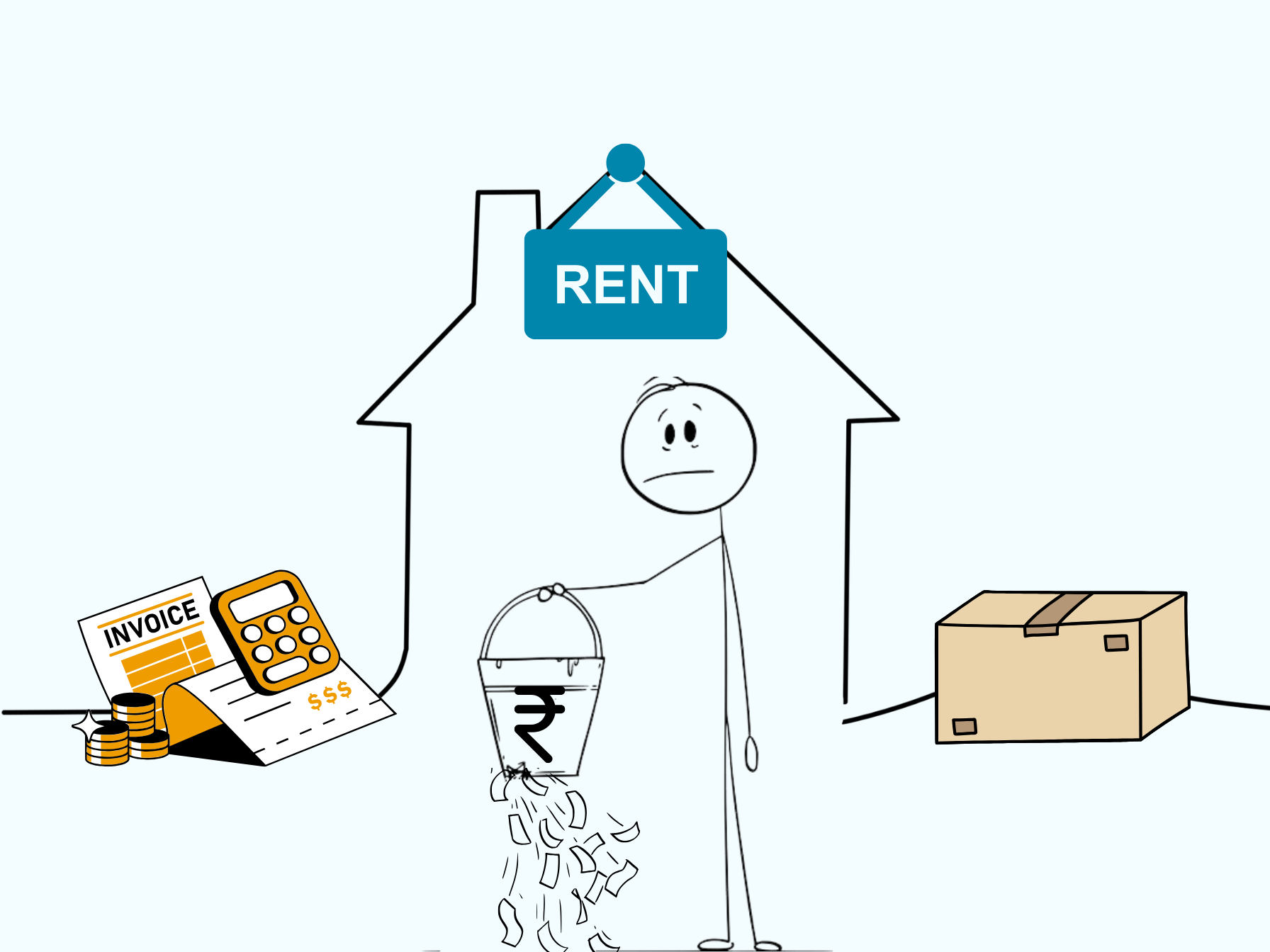
Hidden Costs of Renting: Beyond the Monthly Rent
Introduction:
In our last blog, we looked at the real costs of owning a home. Now, let’s focus on the often-ignored expenses that come with renting. Renting seems like an easy choice. It offers flexibility, needs less upfront commitment, and feels straightforward: you pay your rent and that’s it.
But what if that monthly rent is only the start? As any experienced tenant in India knows, the financial aspects of renting are much more complicated than they first seem. This is your reality check, helping you see the full picture before signing that lease.
Category 1 : Upfront Costs
These are the immediate and significant expenses that you pay upfront to secure a rental property.
- 1. Security Deposits & Brokerage Fees: The Upfront Investment:
- The Security Deposit: This is usually a large sum equal to 2-3 months' rent held by the landlord. It’s refundable, but it ties up a significant amount of your money, and getting it back isn't always easy.
- The Reality Check: In most cities, the deposit is usually 2 to 3 months' rent. However, in high-demand markets like Bengaluru, landlords often ask for 6 to 10 months' rent or more. This is a significant upfront cost that can compare to a down payment on a home.
- Know Your Rights: The Model Tenancy Act, 2021
- In some states that follow this Act, the security deposit for residential properties is capped at two months' rent. This helps protect tenants from high deposits (sometimes 6-10 months' rent) seen in cities like Bengaluru.
- Brokerage Fees: Let’s be honest, finding a rental often means involving a broker. Their fee is typically a one-time, non-refundable cost equal to one month's rent.
- 2. The Hidden Costs of Moving: When Renting Isn't So Easy:
- Movers and Packers Charges: While not strictly a rental cost, this is a significant, recurring expense for any renter. For a local move, these charges can be higher than ₹20,000. Every time you change rentals, this cost starts over.
- Society Move-in/Move-out Charges: Many gated communities and apartment associations charge a one-time fee (from ₹500 to ₹5,000 or more) when tenants move in or out. They often justify this as payment for administrative work and potential wear-and-tear on common areas like elevators.
- 3. Legal & Administrative Costs
- Cost of Registering Your Agreement: This is a key step that makes your agreement legally binding.
- Leave and License vs. Lease: Most rental agreements in India are executed as a “Leave and License” agreement, which gives you a temporary license to occupy the property.
- The Cost: Registration fees include Stamp Duty and other charges. This expense is mandatory and can vary by state and the length of the agreement, sometimes amounting to several thousand rupees.
- Other Costs: like the costs of Police Verification. The cost is often low or even free for an online process, but it adds to the administrative load of moving. Typically, the landlord starts this process, but the tenant must provide all necessary documents.
.png)
Category 2: The Recurring & Unpredictable Costs
These are long-term, ongoing expenses that impact your monthly budget and financial stability.
- 1. Annual Rent Escalations: The Stealthy Price Hike:
- Rent rarely stays constant for long. Most rental agreements include a clause for an annual increase, usually between 5-10%. And remember this is compounded and not simple. So every year, the base changes
- Long-term thought: This unpredictable and growing expense can make it hard to plan your financial future. A ₹20,000 monthly rent today might escalate to ₹26,000-₹30,000 in just a few years.
- 2. Maintenance and Repairs: The "Minor" Fixes:
- While major repairs fall on the landlord, tenants often cover smaller fixes.
- The Gray Area: The rental agreement might say that tenants are responsible for "minor repairs." This can lead to debates over who pays for things like a dripping faucet or a cracked tile. Ensure this is clearly defined in your agreement to avoid arguments. Remember, any changes you undertake are for the benefit of the Owner
Conclusion: The Full Picture of Renting Costs
Renting may seem like a simpler, more flexible choice than buying. But as we’ve seen, the financial and logistical costs can be unexpectedly high and uncertain. The ongoing cycle of moving, rent hikes, security deposits, and non-refundable fees can hinder your ability to build long-term stability.
Understanding these costs doesn't mean you shouldn't rent. It’s about giving you a clear perspective on your financial journey and urging you to ask an important question: are these unpredictable, rising expenses truly the best choice for your future?
Interested in how these rental costs stack up against the stability and wealth-building potential of owning a home? Stay tuned for our next blog, where we’ll offer a detailed cost comparison. Or if you’re ready to take the first step toward a clear and simple path to homeownership, start with us today.